Learn more:https://treerouter.com
Searching for Chinese LLMs often produces lists of model names, benchmark scores, and release announcements. Those lists can help you discover options, but they rarely answer the integration question: which model will complete your application’s tasks through an API you can maintain?
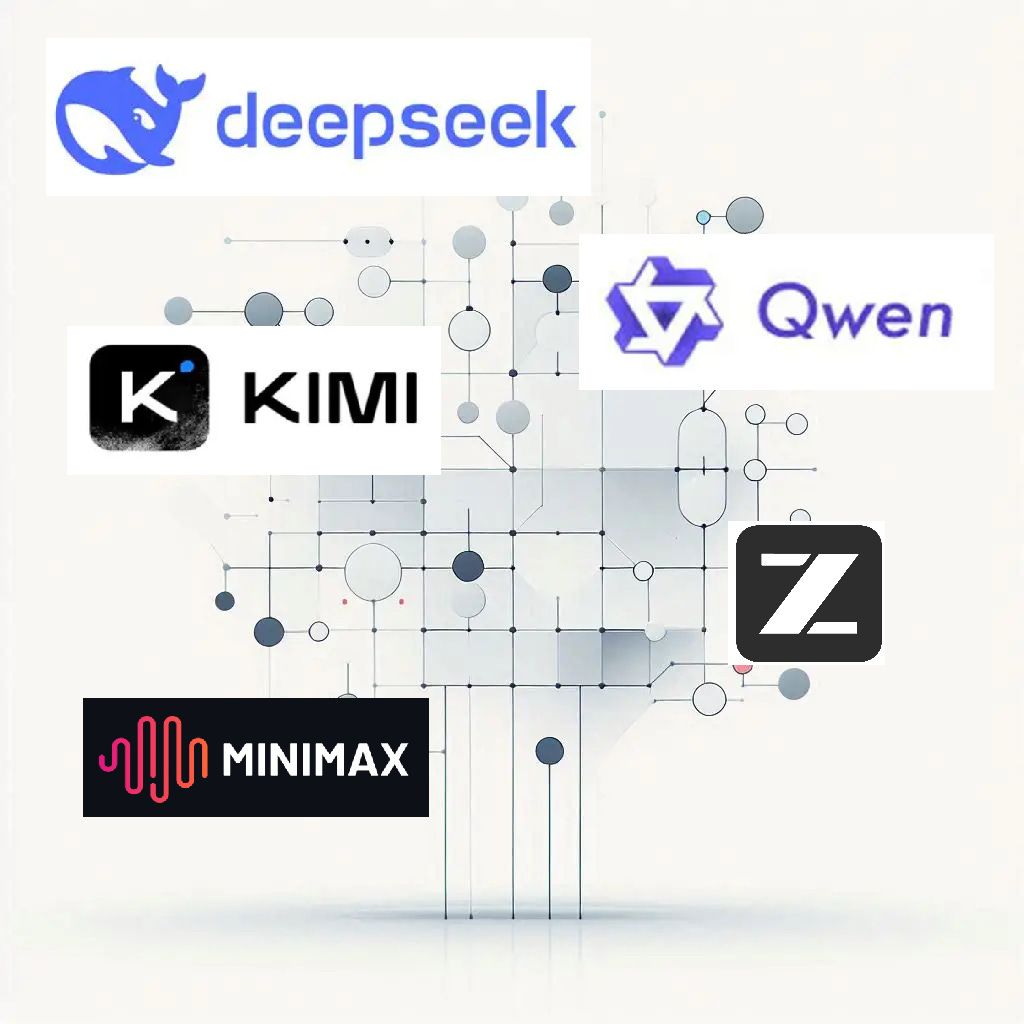
DeepSeek, Qwen, GLM, and Kimi are relevant families to evaluate. They should not be treated as interchangeable products or ranked solely by nationality, model size, or the most impressive demonstration.
This guide shows how to turn a broad model search into a practical selection process. You will define the task, shortlist specific API routes, run a repeatable test, and evaluate whether a multi-model gateway fits the application.
The objective is a model-access decision supported by your workload, not an unsupported claim that one provider is best for every developer.
1. Define what “Chinese LLM” means for your project
The phrase can refer to models developed by Chinese organizations, models used for Chinese-language tasks, or models available through a particular regional service.
These are different selection criteria.
A model’s origin does not determine where a particular hosted request is processed. Chinese-language fluency does not prove that a model preserves product terminology correctly. An available checkpoint does not automatically establish a suitable self-hosting license or deployment cost.
Write down the requirement you actually need to satisfy. It may be bilingual customer support, structured extraction, coding assistance, or a model-access arrangement approved for your business.
That definition prevents a broad search term from turning into a vague procurement requirement.
2. Shortlist API routes, not only model families
A family name is too broad for a reproducible evaluation. Record the exact model ID, endpoint, supported protocol, account requirements, and the date you checked them.
DeepSeek documents SDK-compatible API access. Alibaba Cloud provides an OpenAI-compatible route for Qwen. Z.AI documents GLM API calls and distinguishes its Coding Plan configuration. Kimi’s current quickstart describes several API interfaces. DeepSeek API Docs
These documents establish integration options, not identical behavior across providers.
Select one appropriate route from each family you want to test. Do not compare a small general-purpose model from one family with a high-budget reasoning configuration from another and present the result as a verdict on the entire family.
Record the settings that affect the comparison.
3. Match the evaluation to the application
For customer support, test whether the model answers from supplied policy material, handles missing information, and preserves exceptions.
For extraction, test field accuracy, omitted values, and whether the response can be validated by your application.
For coding, test the actual patch and existing checks rather than relying on a natural-language explanation.
For multilingual content, review terminology, numbers, names, and meaning preservation. A smooth translation can still change a warranty condition or product specification.
These tasks can produce different winners. That is a reason to consider task-specific model selection, not a problem that must be hidden by a single ranking.
Choose the workload before choosing the evaluation metric.
4. Build a compact test set
Start with a small set of representative examples that you can inspect manually.
Include straightforward tasks, difficult tasks, missing-information cases, and examples that previously caused errors. Keep the original inputs and expected acceptance conditions together.
For a support assistant, one useful case is a policy with an explicit exception. Another is a question the policy does not answer.
For extraction, include a missing field and a misleading number that should not populate that field.
Do not use only ideal examples. An application’s reliability depends on how it behaves when inputs are incomplete, inconsistent, or unfamiliar.
Keep this set stable while comparing models. Add new cases when real failures reveal a gap.
5. Make the first API request deliberately small
A minimal request should establish authentication, model access, and basic response handling before you add tools or long documents.
For an OpenAI-compatible gateway route, the following pattern keeps the model identifier outside the code:
import os
from openai import OpenAI

client = OpenAI(
    api_key=os.environ["MODEL_API_KEY"],
    base_url="https://treerouter.com/v1",
    timeout=60.0,
    max_retries=0,
)

response = client.chat.completions.create(
    model=os.environ["MODEL_ID"],
    messages=[
        {
            "role": "system",
            "content": (
                "Answer only from the supplied policy. "
                "Say when the policy does not provide an answer."
            ),
        },
        {
            "role": "user",
            "content": (
                "Policy: Standard items may be returned within 30 days. "
                "Customized items are returnable only when damaged. "
                "Question: Can an undamaged customized item be returned?"
            ),
        },
    ],
)

print(response.choices[0].message.content)
Install the OpenAI Python package first, configure a gateway-issued key, and use an exact model ID available to that account. TreeRouter publishes the base URL used here. The example is illustrative and has not been executed against a paid account for this article. api.treerouter.ai
6. Test the features your application really uses
A text response does not validate image input, structured output, tool calling, streaming, or multi-turn continuation.
Add each required capability separately.
For structured output, check both syntax and meaning. A JSON object can be valid while assigning the wrong value to a field.
For tool use, confirm the complete round trip: the model requests the correct operation, your application validates it, the operation returns a result, and the model uses that result appropriately.
For streaming, observe completion and interruption behavior. A client that displays partial text successfully may still mishandle the final event or a failed connection.
Treat compatibility as a set of tested capabilities rather than a single yes-or-no label.
7. Decide whether direct access or a gateway fits better
Direct access can be appropriate when the application depends on one provider and needs its specific features or account controls.
A gateway becomes worth evaluating when you need several supported model routes and want a shared integration layer.
TreeRouter can be assessed in that second role. Keep the application’s business logic separate from endpoint and model configuration so that a model change does not require rewriting the whole workflow.
However, do not assume that a gateway eliminates all provider differences. Native tools, request extensions, context behavior, and response fields may still require explicit handling.
The decision should reflect your application’s complexity, operating requirements, and evaluation results.
8. Give “best LLM gateway” a measurable definition
The best gateway for a particular application is the one that meets its actual requirements at an acceptable total cost.
Define those requirements before comparing services.
Can the account access the exact models you need? Does the required protocol work? Can you understand usage and errors? Does the service expose the information your team needs to investigate a failed request?
Also examine the migration boundary. Determine which settings remain configuration and which features require code changes.
A long model list is not enough. Neither is a claim of fast routing without evidence from your region and workload.
Run the same task set through the candidate service and inspect the complete result.
9. Compare cost per accepted result
Nominal token pricing is only one part of application cost.
Include retries, repeated context, tool-related requests, failed outputs, and manual correction. Keep the provider’s published price separate from the actual terms of the gateway or plan you use.
For a document-processing task, an accepted result may require every mandatory field to be correct. For support, it may require an answer supported by the supplied policy.
Use a consistent definition across models. Otherwise, one configuration may appear cheaper simply because you accepted lower-quality output.
A cost comparison should explain what the application received for the money, not only how many tokens were billed.
10. Measure latency across the complete task
Time to first output can matter for an interactive interface, but it is not the same as time to a useful completed result.
A model may begin answering quickly and then spend longer on the overall workflow. Another may require fewer retries or produce an output that needs less correction.
Record both the user-visible response experience and the total time to acceptance.
Test with realistic input lengths and the required tools. A short greeting is not a meaningful latency benchmark for a multi-document analysis task.
Avoid announcing a universal speed advantage from one request. Network conditions, service load, model settings, and task complexity can all affect the observation.
11. Plan model switching without hiding behavior changes
A shared API format makes switching easier, but it does not make outputs equivalent.
When you introduce a fallback model, rerun the same evaluation set. Verify that the fallback preserves important business constraints and output requirements.
For structured workflows, validate the result before allowing downstream actions. For customer-facing text, ensure the fallback does not silently drop evidence requirements.
Keep model selection visible in internal records so that a later investigation can identify which route produced a result.
Do not promise identical behavior across different models. Design the application to detect unacceptable differences and handle them explicitly.
12. Review data handling and operational ownership
Before processing real business material, understand the access arrangement and relevant service terms.
Identify who owns the credentials, who can change model settings, and how the team responds when a key expires or a route becomes unavailable.
Keep secrets out of frontend code and ordinary analytics. Store only the diagnostic information needed to investigate failures under your organization’s access policy.
For a small team, this can begin with a short configuration record and a documented rotation procedure. It does not require an elaborate platform to avoid having one employee’s personal setup become an undocumented dependency.
Operational clarity is part of model selection because the application must remain maintainable after the initial demo.
Frequently asked questions
Which Chinese LLM is best for coding?
There is no reliable answer without a specified model version, task set, configuration, and evaluation method. Compare actual patches and verification results on representative work.
Does OpenAI compatibility mean every parameter is supported?
No. Confirm the required features for the particular endpoint and model. Basic request compatibility is not a complete capability guarantee.
Is a GLM proxy the same as a GLM model?
No. The proxy or gateway is an access layer. The underlying model, protocol, account permissions, and supported features still need to be identified.
Can one model handle every task?
It may be sufficient for a small application. For a mixed workload, compare whether task-specific model selection improves accepted output or operating cost before adding routing complexity.
Turn the shortlist into a working integration
Choose two or three available models, run the same test set, and compare accepted output, complete-task latency, and actual usage.
Visit TreeRouter to review supported routes and create a test key after confirming your requirements. Start with a small workload whose outcome you can judge, then expand based on measured results.