Introduction
DeepSeek Harness has rapidly gained traction within developer communities as a practical tool for routing Codex workflows onto DeepSeek model backends. Many practitioners initially misunderstand its core function, assuming it represents a brand-new standalone model. In reality, DeepSeek Harness operates as a middleware translation and control layer, which intercepts requests originally built for Codex, converts request schemas, forwards payloads to DeepSeek-compatible APIs, then translates returned outputs back into Codex-compliant response formats. The whole pipeline remains nearly transparent to end users, while switching the underlying inference provider to DeepSeek.
This article breaks down DeepSeek Harness in five major sections: core definitions, installation workflow, internal operational mechanics, real-world task demonstrations, and troubleshooting guidance. It consolidates common failure modes and fixes, enabling developers to build local agent workflows powered by DeepSeek without repetitive trial and error.
1. Core Definition of DeepSeek Harness
1.1 Harness is Not a Model, But the Control Layer Wrapping Model Inference
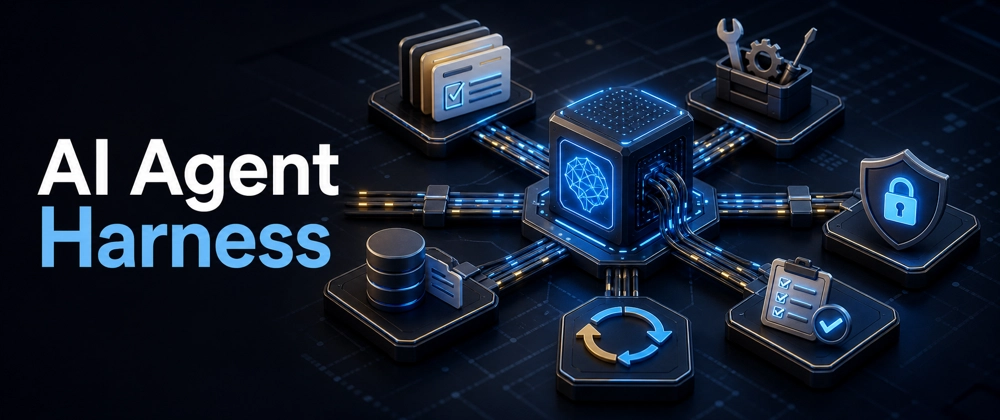
The term “harness” in agent engineering refers to a runtime controller rather than an LLM itself. A large language model can be analogized to an engine, whose output capacity is determined by parameter scale. A harness serves as steering, throttle and instrument panel components. It cannot alter the engine’s theoretical maximum output, yet it governs when inference runs, the direction of task execution, and the timing of state transitions.
DeepSeek Harness is a community-developed wrapper suite tailored for DeepSeek API access. Its core value lies in protocol translation. It intercepts native Codex API requests, translates them to match DeepSeek request specifications, then converts DeepSeek outputs back into formats compatible with Codex clients. Developers can continue using familiar Codex CLI and VS Code extensions, with the model backend silently replaced by DeepSeek.
The tool addresses tangible pain points for engineering teams. Direct DeepSeek API calls require manual handling of multi-turn conversation state management and complex agent logic. Harness encapsulates these processes automatically. After deployment, developers retain their existing workflow while significantly cutting inference costs, especially on heavy multi-file refactoring workloads.
1.2 Problems Solved by DeepSeek Harness
Direct use of DeepSeek web UI or raw API access is feasible, yet DeepSeek Harness resolves four critical practical constraints.
First, seamless workflow integration. Developers prefer executing coding tasks inside IDEs and command-line terminals, rather than copying content back and forth between web chat interfaces. Codex CLI and VS Code plugins have mature interaction patterns. Harness embeds DeepSeek capabilities into these environments and eliminates manual cross-platform content transfer.
Second, controllability of agent task execution. Autonomous agents frequently suffer from out-of-bound behaviors, such as unauthorized file modification or context corruption. Harness adds rule sets and context management outside the model layer. Administrators can restrict directory access, mandate pre-modification planning steps, and enforce Git diff logging for every code change. These guardrails prevent destructive operations.
Third, cost reduction. DeepSeek API pricing sits at a lower tier compared with many proprietary coding models. For regular batch workloads including unit test generation, comment refactoring and historical code review, operational expenses drop to negligible levels. This unlocks heavy AI-assisted coding scenarios previously limited by high inference cost.
Fourth, privacy support. Certain code repositories cannot leave private networks, making pure cloud API calls inappropriate. Harness supports local request forwarding, and can pair with local quantized models to run code analysis within isolated environments. Local full-precision model deployment demands high-end hardware; quantized variants are the realistic option for standard workstations.
1.3 Clarifying Terminology: DeepSeek Harness, Hermes, Codex Harness and ccswitch
Multiple similarly named tools appear in the agent development ecosystem. Harness represents a broad category of runtime control frameworks, with many independent community implementations. DeepSeek Harness is purpose-built for DeepSeek and optimized for its SFT and reasoning modes.
Hermes is another community project. While Hermes also belongs to the harness family, it emphasizes raw prompt transformation. Codex Harness adapts Codex clients to run on non-OpenAI model endpoints, and DeepSeek is just one compatible backend. The ccswitch utility acts as a local agent request switcher, managing traffic routing between different model services.
For new adopters, the recommended starting stack is DeepSeek Harness main branch paired with ccswitch for request forwarding. This combination minimizes configuration conflicts. Developers can explore Hermes after gaining familiarity with harness concepts. Tools such as ZCode connectors follow similar configuration principles, yet full agent task execution relies on stronger control capabilities from a harness layer.
2. Installation Guide: Build from Scratch
2.1 Environment and Credential Preparation
The validated test environment runs on macOS, and the command set maintains compatibility for Windows and Linux systems. Runtime prerequisites include Node.js 18+ and Python 3.10+. The harness toolchain is largely written in Node.js, handling local proxy and command execution; Python supports Codex plugins and auxiliary script dependencies.
A DeepSeek Open Platform API Key is required. Developers register accounts and create keys via the official platform. Two critical notes apply for key management: API keys are only displayed once upon creation and must be saved immediately. Account balance tracking is essential. Sudden service interruption mid-task results in lost conversation context.
Codex CLI must be pre-installed. VS Code users may install official or community DeepSeek plugins optionally. Network connectivity validation is required: the terminal needs stable outbound access to DeepSeek API endpoints. Strict internal network egress rules may block external API access without extra proxy setup.
2.2 Install the Harness Binary
Harness provides CLI and desktop installation packages. The CLI version is recommended for easier log inspection and automation scripting. Desktop packages wrap the CLI within a graphical UI while retaining identical underlying logic. After first launch, users select a working directory to store configuration files, logs and agent task records. A dedicated folder separate from system directories is advised for easier backup and cleanup.
# CLI installation
npm install -g deepseek-harness
# Verify installation
harness --version
Permission errors during installation commonly stem from insufficient global directory write access. Sudo commands resolve permission constraints, or users can reconfigure npm global paths and add them to system PATH variables.
2.3 Connect DeepSeek and Configure Model Mapping
Model mapping is the core configuration step. Codex clients call native OpenAI model identifiers. Harness translates these identifiers to target DeepSeek models. Interactive CLI commands complete provider registration:
# Register DeepSeek provider
harness provider add deepseek
Required input values include API Key, base API URL and default model selection. The command generates JSON configuration entries within the designated working directory.
Model mapping commands bind Codex model identifiers to DeepSeek endpoints:
harness model map gpt-5-codex deepseek-v4-flash
harness model map gpt-5-reasoner deepseek-reasoner
When ccswitch local agent forwarding is deployed, its configuration points to Harness local endpoints. The full request chain follows: Codex request → ccswitch → Harness → DeepSeek API. Request latency added by this local loop is minimal, but operators must trace the pipeline for troubleshooting.
3. Core Mechanisms: Local Proxy and Key Parameters
3.1 Local Proxy Principle
A local proxy HTTP service runs on the developer workstation and listens on a dedicated port. It simulates Codex API endpoints, commonly under the /responses route. All Codex client requests hit this local service first.
Direct base URL modification will trigger protocol mismatches. Codex clients perform strict validation on message schema, parameter structure and mandatory fields. Harness and ccswitch perform bidirectional translation: converting OpenAI-style request payloads into DeepSeek API schemas, and converting DeepSeek responses back to OpenAI-compliant formats. Missing translation logic is the primary source of 400 Bad Request errors.
The proxy works like an interpreter between two parties speaking different languages. Codex sends requests following OpenAI specifications, and Harness translates these instructions before forwarding to DeepSeek. Return content undergoes reverse translation so Codex clients parse outputs normally.
3.2 Model Selection: deepseek-v4-flash versus Reasoning Model
Two primary model variants serve different workloads. deepseek-v4-flash delivers low latency and lower token consumption, with clean code outputs suitable for daily code completion, script generation and bug fixes. For complex multi-file refactoring, deep code inspection and heavy agent workflows, deepseek-reasoner is recommended. Reasoning models execute internal thought processes before returning final answers, at the cost of longer runtime and higher token usage.
Operators can toggle model mapping dynamically within Harness configuration. The max_tokens parameter controls output length. Overly high values increase response time and risk context truncation. A practical default setting sits around 4096 tokens, adjustable based on task complexity. The temperature parameter controls randomness. Values near 0.2 produce stable, deterministic code generation. Higher values introduce creativity but increase non-determinism.
3.3 Thinking Mode and reasoning_content Forwarding Rules
DeepSeek reasoning models embed complete internal reasoning traces within reasoning_content fields returned by API responses. This metadata can be inspected through API return payloads or official web interfaces.
Critical protocol constraints apply for multi-turn conversation continuity. When reasoning mode is enabled, every subsequent request must forward the complete reasoning_content from prior turns. Failure to pass this field results in 400 errors. Many early agent tooling implementations omit this forwarding step, triggering frequent failures.
When debugging this error, full request and response payload logging must be enabled. Partial log capture hides missing fields and obscures root causes. Once full logging is active, operators validate whether reasoning_content persists across sequential requests.
4. Practical Workflow Demonstration Across Three Scenarios
4.1 Scenario 1: Batch Data Cleansing Script via Codex CLI
This task targets a CSV dataset with roughly 20 thousand user records containing missing values, duplicate entries and inconsistent timestamp formatting. The requirement is to build a Python script that automatically cleans data, exports standardized CSV files and prints summary statistics.
The Codex CLI command submits the task to Harness. Within two seconds, DeepSeek begins streaming outputs. Generated code includes argument parsing and data validation logic. The first iteration correctly implements most cleansing rules, with minor adjustments applied in a second run. The full task completes in under three minutes.
Comparatively, proprietary coding models incur significantly higher token cost and slower execution for identical batch processing jobs. This workflow reduces manual data cleansing work from one hour to a few minutes for analysts.
4.2 Scenario 2: VS Code Native Completion via DeepSeek
VS Code integration has two routes: direct DeepSeek plugin calls, or local proxy forwarding through Harness. Direct plugin integration is simpler for individual developers. Harness proxy routing becomes advantageous for enterprise environments with multi-model management requirements.
VS Code Codex plugin settings redirect base URL to the local Harness endpoint, and model identifiers map through Harness configuration. deepseek-v4-flash fits inline completion use cases, while reasoning models introduce noticeable latency and are better reserved for deeper code review tasks. Harness local proxy supports listening on multiple ports simultaneously, enabling independent traffic streams for Codex CLI and VS Code. Multiple agent sessions can run concurrently on one machine without conflict.
4.3 Scenario 3: Multi-step Agent Workflow and Cross-Tool Integration
Harness can run multi-turn agent workflows that analyze existing repositories, identify optimization opportunities and output refactoring proposals. The agent first scans project structure, identifies code issues, then executes modification step by step while preserving task state. Reasoning mode increases waiting time but improves result quality. In this test case, two of three detected issues represented valid optimization opportunities, while the third was advisory only.
The proxy architecture also supports enterprise message system integration. Internal chat services forward requests to the local Harness endpoint and relay model responses back to users. This setup is subject to platform message length limits, and extremely long conversations may get truncated.
4.4 Observed Performance, Cost and Limitations
Harness adds negligible overhead. Streaming responses arrive quickly. Reasoning agent tasks have longer runtime, which originates from model inference rather than proxy processing. DeepSeek’s code generation quality is strong, and its Chinese language comprehension aligns well with native developer habits.
Limitations exist. For extremely niche libraries, API call examples provided by the model may be outdated and require manual documentation checks. In rare multi-turn scenarios, agents attempt to modify unrelated files. Harness permission controls mitigate this risk, by locking agent working directories within designated folders to prevent unintended cross-file changes.
When operating multiple model backends for agent pipelines, unified traffic management simplifies credential handling and observability. Treerouter, acting as an API gateway, helps standardize access control when routing requests between various model services.
5. Common Error Modes and Troubleshooting
5.1 Frequent Error: HTTP 400, reasoning_content must be passed back
This is the most prevalent failure. The error indicates incomplete forwarding of reasoning metadata in multi-turn dialogues. When reasoning mode is active, every request must carry reasoning_content history.
Recommended fixes: upgrade Harness to latest release, older versions mishandle reasoning content transmission. Disable reasoning mode temporarily to validate pipeline functionality. If reasoning mode is required, enforce full history forwarding in configuration. Debugging should start with single-turn reproduction before modifying full configuration stacks.
5.2 local proxy failed while handling codex endpoint /responses
This error indicates local proxy service failure. Troubleshooting proceeds sequentially: confirm Harness service is running, verify port occupancy, validate API key and base URL, and inspect raw response logs from upstream DeepSeek API.
Most failures relate to stopped service, port conflicts or invalid credentials. Less commonly, firewall rules block localhost traffic. The loopback address 127.0.0.1 must be used correctly in configuration. Operators can test API connectivity independently with curl commands to isolate upstream issues.
5.3 Connection Timeout, Context Truncation and Other Defects
Timeout failures arise from slow DeepSeek API responses or tight default timeout thresholds. Adjust timeout parameters in Harness configuration to resolve this issue. Long conversation workflows risk context window exhaustion. Developers can implement automatic summarization to compress historical dialogue and retain core requirements only.
Context overflow also appears when model mapping selects a variant with smaller context limits. Validate model specifications and adjust max_context_length configuration.
5.4 Quick Reference Table for Fault Diagnosis
| Phenomenon | Root Cause | Recommended Remedy |
|---|---|---|
| 400 error, reasoning_content must be passed back | Missing reasoning metadata forwarding | Enable reasoning history pass-through or switch to non-reasoning model |
| local proxy failed | Harness service stopped / port occupied / invalid key | Check process status, port binding and API credential |
| Request stuck with streaming interruption | Network instability or timeout limit too low | Increase timeout value and inspect network egress |
| Context truncated | Context window overflow | Activate conversation summarization or use larger context model |
| Slow response | Reasoning model selected for lightweight task | Switch to flash variant for simple completion |
| Unauthorized error | Expired or incorrect API Key | Recheck and refresh credential configuration |
Conclusion
DeepSeek Harness removes the friction of switching coding model backends while retaining mature Codex client tooling. It delivers four core benefits: IDE workflow continuity, agent execution guardrails, inference cost reduction and private-network deployment options. The tool stack is built around local proxy protocol translation, with careful handling of reasoning_content as a critical requirement for multi-turn reasoning tasks.
Deployment follows a structured workflow: environment preparation, CLI installation, provider registration and model mapping. Developers should start with simple scripts to validate connectivity before running heavy multi-file agent jobs. Systematic log inspection and staged troubleshooting resolve most runtime failures. As teams maintain multiple LLM services for agent development, centralized routing and access control become foundational for stable production rollout.
Learn more:https://treerouter.com