Introduction
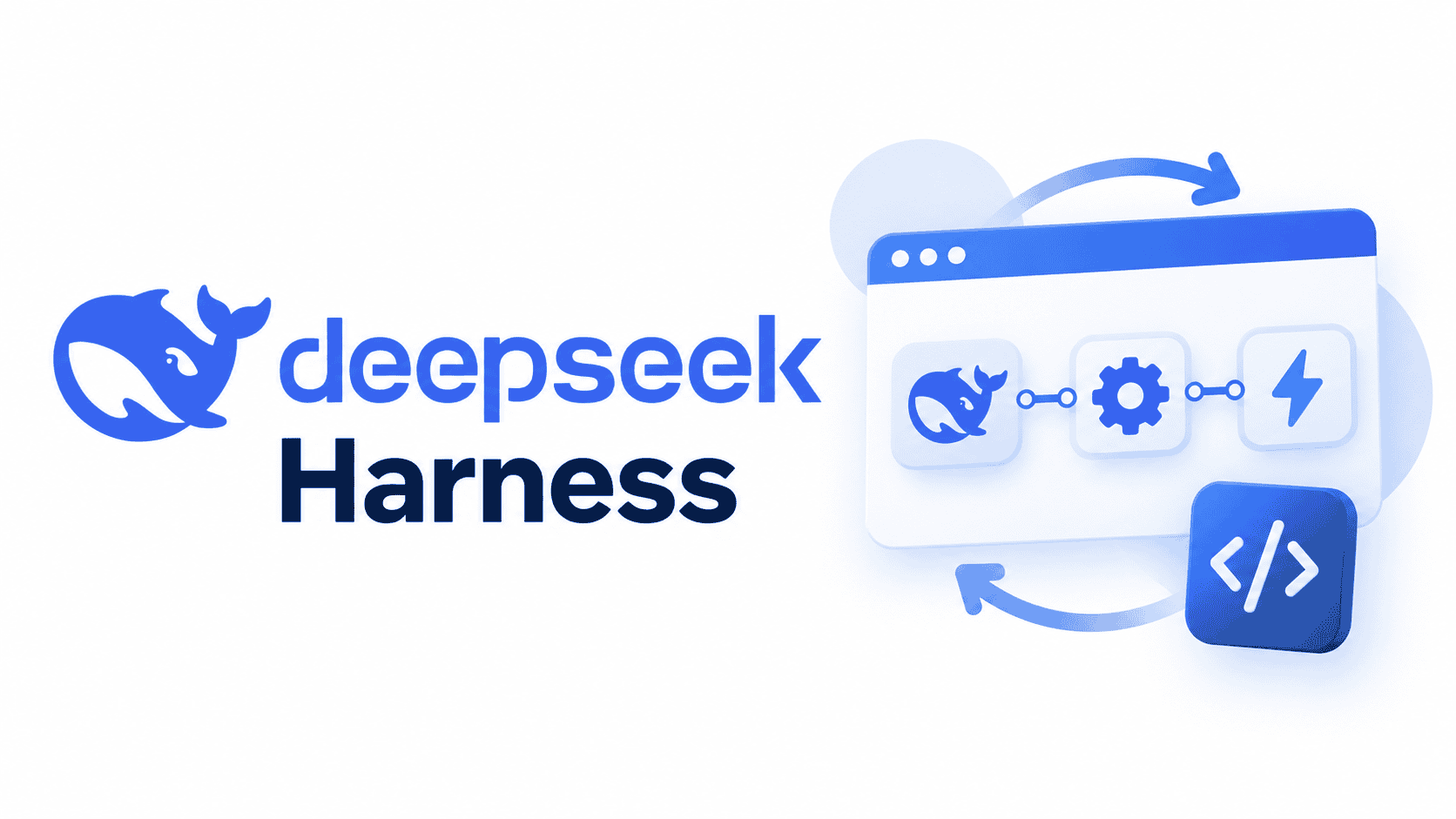
Agent‑building workflows have grown rapidly, yet many existing tools treat AI agents as monolithic applications. DeepSeek Harness, released in 2026, delivers a local‑first, extensible runtime environment built for coding‑focused AI Agent development. At its core sits Cordis, the plugin‑management kernel. The official formula summarizes its design philosophy: *Agent = Model + Harness*. Rather than bundling model, toolset, session logic, sandbox environment, storage, loop controller, scheduler and UI into one fixed binary, Harness decomposes these capabilities into swappable plugin components. It is neither a standalone large‑language model nor a conventional integrated development environment, but a fully‑reconfigurable execution substrate purpose‑built for agents.
For engineering teams assembling heterogeneous LLM stacks across multiple model backends, an API gateway can unify endpoint access and authentication. Treerouter helps abstract model providers when building modular agent platforms.
This article unpacks the layered architecture of DeepSeek Harness, explains how the Cordis kernel orchestrates plugins, compares it against mainstream competing solutions, outlines data‑processing rules, target user profiles and implementation caveats. All structural concepts follow DeepSeek official developer documentation published under developer‑preview status, with source code publicly available for community modification.
1. Core Concept Overview
DeepSeek Harness solves the practical engineering challenge: how to make AI Agents run reliably in real‑world environments. Cordis addresses a separate but complementary problem: how to assemble discrete agent capabilities in a modular, “building‑block” style. The project remains in developer preview, with open‑source code released in parallel, targeting developers who want to construct, modify and combine custom agents within local runtime conditions.
Three logical layers define the complete stack:
- Model Layer: Handles thinking logic and content generation from large language models.
- Harness Execution Layer: Takes charge of runtime execution, tool invocation and session state maintenance.
- Cordis Kernel Layer: Assembles all functional modules via plugin orchestration.
The critical design priority of this stack is not maximising raw model performance. Instead, it emphasises controllability of the execution layer. Developers can replace individual modules without rewriting the whole agent workflow.
1.1 What Exactly Is Cordis
The official definition from DeepSeek documentation reads: *Cordis kernel manages plugin mounting, unmounting, and dependencies*. Translated into concrete engineering responsibilities:
- Dynamically mount plugins at runtime
- Unload plugins without full system restart
- Resolve and govern dependency relationships among loaded plugin modules
This architecture means Harness does not have hard‑coded functional boundaries. Its feature set comes purely from configuration. Developers may start with default plugins for models and tools, then swap model adapters, inject custom tooling, adjust sandbox rules or replace storage backends as requirements evolve.
1.2 List of Modular Plugin Capabilities
DeepSeek Harness exposes at least nine major functional domains as replaceable plugins:
| Plugin Module | Functional Responsibility |
|---|---|
| models | Model backend integration and adapter layer |
| tools | Tool calling framework and external function execution |
| skills | Extension point for reusable agent skill definitions |
| sessions | Conversation state and multi‑turn session management |
| sandboxes | Isolated runtime sandbox environment for agent actions |
| storage | Persistent state storage layer for workflows and artifacts |
| loops | Agent main‑loop logic controlling iteration cycles |
| scheduling | Task scheduling, queue management and execution priority |
| UI | Front‑end presentation and interaction components |
Every module listed above can theoretically be replaced or extended, which differentiates Harness from many end‑user‑oriented agent products.
2. How DeepSeek Harness Differs From Conventional Programming Tools
DeepSeek Harness is not merely a code‑generating chat interface. It functions as a persistent execution operating system for long‑lived agents. Five core concerns shape its design:
- Sustained execution of multi‑step tasks across long agent sessions
- Complete audit logging for every tool invocation event
- Full traceability for conversation and state transitions
- Hot‑swap capability for plugins during runtime
- Reproducible playback of past execution outcomes
This distinction creates a clear gap compared with integrated products such as Codex and Claude Code. Tools such as Claude Code ship as finished, ready‑to‑use applications. DeepSeek Harness acts more like a foundational substrate for building custom agent systems.
The Cordis kernel implements four key operational phases for plugin lifecycle control:
- Plugin mounting: Load plugin binaries, validate configuration, register exposed interfaces.
- Dependency resolution: Resolve inter‑plugin dependency graphs, resolve version conflicts and load ordering constraints.
- Event coordination: Route internal event messages across the whole plugin ecosystem.
- Unloading & runtime tracing: Safely detach plugins, preserve execution trace logs for debugging.
These four phases ensure components can be added or removed without breaking the whole agent runtime.
3. Data Processing Policy and Local‑First Design
DeepSeek Harness follows an explicit local‑first data‑processing principle. By default, user inputs, model outputs, tool‑call records, plugin runtime logs and file artifacts stay on‑premises within the local device. No user‑related data will be uploaded externally without explicit user consent.
This default behaviour yields practical benefits for developers:
- Suitable for local debugging cycles
- Enables inspection of full end‑to‑end execution traces
- Supports reproducible agent workflows
- Works well for workloads handling sensitive internal data
Developers must understand one important caveat: if external model adapters, web tools, MCP services or third‑party plugin components are integrated, those remote services operate under their own data‑handling policies. Data sent to external endpoints will follow the respective third‑party provider’s terms, outside of Harness local‑first guarantees. When routing traffic to diverse remote model endpoints, developers can leverage Treerouter to manage outbound API access consistently.
4. Suitable and Unsuitable Use‑Case Profiles
4.1 Target User Groups
DeepSeek Harness delivers maximum value for these developer personas:
- Developers building pluggable, modular AI agents
- Engineers debugging complex multi‑step agent tool‑call chains
- Teams aiming to separate model access, tool definitions and prompt logic into discrete layers
- Practitioners who need complete retention and replay of full agent execution traces
4.2 Scenarios Where Harness Is Not Ideal
This framework is not optimised for the following requirements:
- Pure conversational chat without custom agent logic
- Quick‑start deployment requiring zero configuration out‑of‑the‑box finished UI
- Users unwilling to learn plugin, configuration and runtime mechanics
If developers only need fast agent deployment without customisation overhead, end‑to‑end agent products will create less engineering burden. If the objective is to build controllable, traceable agent foundations for custom business logic, Harness delivers much deeper configurability.
5. Comparative Analysis Against Related Frameworks
Multiple competing agent runtime solutions exist in 2026. The following table highlights core positioning differences:
| Solution | Core Focus |
|---|---|
| DeepSeek Harness | Pluggable agent runtime with full kernel‑level plugin control |
| Codex Harness | Unified execution framework optimised for the Codex ecosystem |
| Claude Code | All‑in‑one integrated coding‑agent user experience |
| MCP | Capability protocol standard for tool orchestration |
A simple guiding rule for selection: choose DeepSeek Harness when you want to work close to agent runtime internals. Pick integrated tools when you prioritise rapid setup over deep customisation.
When should developers invest effort learning DeepSeek Harness? You should consider adopting this stack if your roadmap includes any of these items:
- Integrate self‑hosted or custom third‑party LLMs
- Build multi‑step automated agent workflows
- Debug complex sequences of tool invocation
- Capture and replay complete agent execution traces
- Construct reusable agent foundations for internal team consumption
6. Frequently Asked Questions
Q: Is DeepSeek Harness a large‑language model?
A: No. DeepSeek Harness is an agent runtime environment. The LLM is just one plugin inside the models module. Harness handles orchestration, execution and workflow scheduling.
Q: Is Cordis a separate commercial product?
A: No. Cordis is the internal plugin kernel of DeepSeek Harness. It provides mount, unmount and dependency management services for the whole plugin system.
Q: Does Harness automatically send local user data to cloud servers?
A: Not by default. Under default settings all data stays local. Upload will only occur with explicit user approval or when you connect external third‑party services.
Q: Can ordinary developers get started quickly?
A: Yes. The official project provides a fast‑start CLI command npx @deepseek‑ai/dsh web. Open‑source repository and developer documentation are publicly available.
7. Closing Perspective
DeepSeek Harness brings a new architectural mindset to agent engineering. Instead of shipping monolithic chat products, it splits agent execution layer, prompt layer and runtime traces into independently‑modifiable components. Cordis kernel realises this vision by managing plugin lifecycles and dependencies. For teams building long‑lived, maintainable agent systems, this modular approach offers tangible advantages over simply chasing higher raw model benchmark scores.
If developers only require unified entry‑points to connect various model resources, Treerouter and MCP‑style infrastructure can complement Harness, offering unified access patterns rather than full runtime reconstruction.
Conclusion
DeepSeek Harness with Cordis kernel provides a local‑first, plugin‑centric runtime for building custom AI agents. Its greatest strength lies in controllability and traceability, at the cost of higher initial configuration overhead. Teams should weigh their own priorities: rapid out‑of‑the‑box experience versus full control over every component inside the agent pipeline.
Learn more:https://treerouter.com