Released in April 2025, GPT Image 1 is OpenAI’s dedicated private API for AI image generation. Built upon advanced multimodal technologies, it delivers robust capabilities including customizable parameters, intelligent image editing and bulk content creation. This model has pushed AI visual production into a new phase characterized by high controllability, scalable deployment and seamless system integration. This paper conducts an in-depth analysis of GPT Image 1, covering its technical architecture, core functions, diverse industry applications, cost models, competitive landscape and future development trends. Supported by authoritative data and practical cases, this article serves as a detailed reference for developers, design teams and enterprises looking to adopt commercial AI image generation solutions.
1. Technical Architecture and Core Design Principles
GPT Image 1 adopts a hybrid framework combining multimodal Transformer and diffusion models, inheriting the powerful cross-modal comprehension capabilities of OpenAI’s large language models while integrating cutting-edge denoising diffusion technology proposed in classic academic research. It also leverages mature vision-language pre-training models such as CLIP and BLIP-2 to realize bidirectional conversion between text and visual content, including text-to-image and image-to-image generation.
In terms of technical optimization, the model applies layered sampling and adaptive resolution adjustment. This dual mechanism balances generation speed and image quality, enabling stable output across multiple resolutions and file formats. From the perspective of engineering design, the API supports fine-grained parameter configuration, allowing developers to adjust image specifications according to business needs. Beyond basic generation functions, GPT Image 1 is embedded with a built-in content security detection module that complies with mainstream global compliance standards such as GDPR and CCPA. It also supports enterprise private deployment to fully protect user data and business confidentiality.
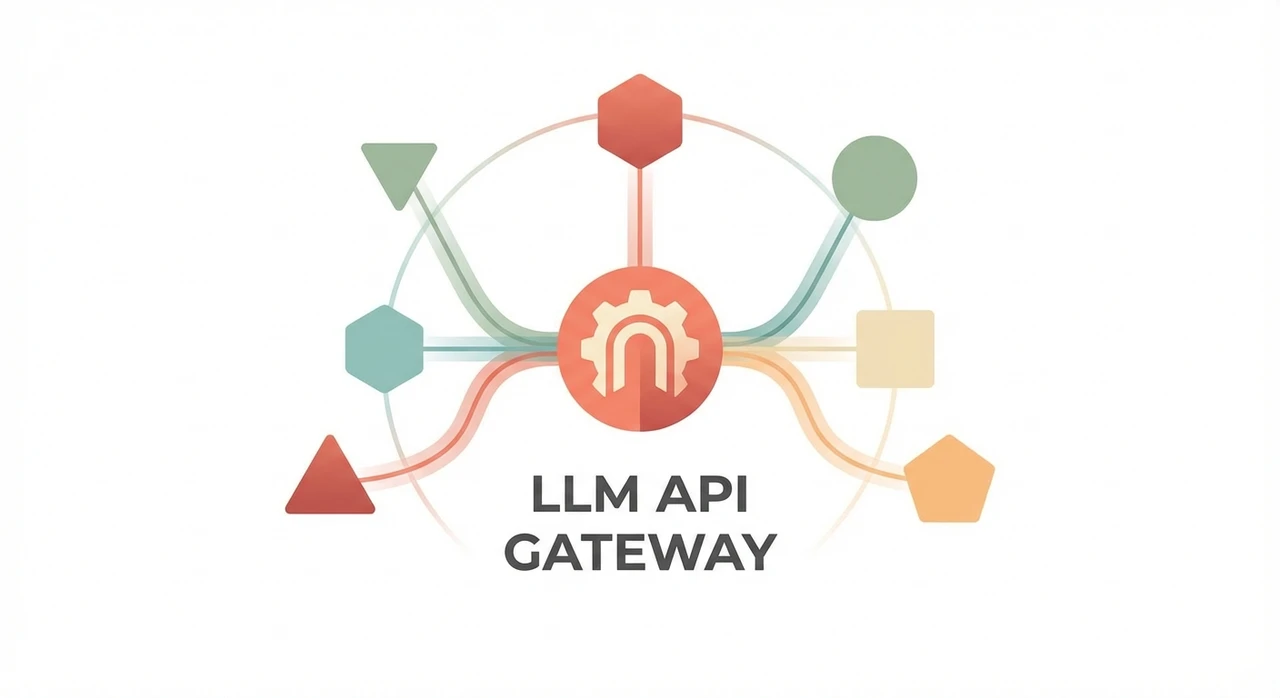
For teams managing multiple AI model interfaces in daily development, a unified API gateway can simplify docking and operation work. treerouter standardizes the calling specifications of various AI services, helping developers efficiently connect and manage different visual and language models in one unified environment.
2. Core Functional Modules
The strengths of GPT Image 1 are reflected in flexible parameter control, professional editing tools, bulk generation and convenient API integration. Each function is tailored to address the pain points of commercial visual creation.
2.1 Fine-grained Parameter Customization
Developers can adjust a full set of parameters via API calls to adapt to different scenarios. It supports mainstream resolutions including 1024×1024 and 1024×1536, and also allows users to set custom dimensions. High-resolution outputs suit advertising and e-commerce scenarios that demand intricate details, while medium and low resolutions work better for social media content that requires fast loading.
For output files, the model is compatible with PNG, JPEG and WebP formats. Users can set the compression ratio from 0 to 100% to strike a balance between image quality and file size. It also supports PNG files with transparent channels, which facilitates post-production compositing and secondary editing for design teams.
2.2 Intelligent Image Editing
This module contains two practical tools: reference image editing and mask-based local modification. With reference images plus text prompts, users can achieve style migration and element replacement efficiently. Mask editing enables targeted adjustments such as watermark removal, background replacement and partial retouching, matching the performance of professional photo editing software. Meanwhile, the model recognizes a wide range of artistic styles including minimalist, cyberpunk and oil painting, providing rich creative options.
2.3 Bulk Image Generation
By configuring the quantity parameter in API requests, users can generate multiple images with consistent styles and varied details in a single call. This function greatly boosts the productivity of content teams. It is widely applied in game asset creation, multi-version advertising design and multi-angle product display.
2.4 API and Workflow Integration
GPT Image 1 follows RESTful API specifications and provides complete SDKs for Python, JavaScript, Java and other mainstream programming languages. It can be seamlessly connected with CI/CD pipelines, content management systems, e-commerce platforms and design tools to build fully automated visual production workflows.
3. Industry Application Scenarios and Practical Cases
GPT Image 1 has been widely adopted across multiple industries. Traditional visual creation faces problems such as high shooting costs, long cycles and limited creativity. This model effectively solves these pain points, and relevant industry data proves its practical value.
3.1 E-commerce Industry
Traditional product shooting requires on-site arrangement, model coordination and post-processing, which costs a great deal of time and money. With GPT Image 1, merchants can generate product photos and model wearing images just by entering product descriptions and style requirements. The model supports creation for different skin tones, body types and shooting scenes to adapt to global markets. According to data from Statista, high-quality product images can lift e-commerce conversion rates by 15% to 30%. Many e-commerce brands use this model to produce multiple visual solutions for A/B testing, so as to select the optimal display content.
3.2 Advertising and Creative Design
Advertising teams often need to create multiple versions of posters and banners to respond to changing client demands. GPT Image 1 can generate a variety of creative drafts in batches while maintaining unified brand styles. Integrated with Adobe series tools, it improves the overall work efficiency of design teams. According to Adobe’s Q2 2024 financial report, teams equipped with AI generation tools see an average productivity increase of 40%.
3.3 Education Sector
Making teaching illustrations and historical scene reproductions has long been a burden for educators. Teachers can generate course illustrations, scene diagrams and interactive course materials through text descriptions. After piloting AI image tools, Yuanfudao, a major online education platform in China, saw a 22% rise in course interaction rates.
3.4 Game and Film Industry
Game and film teams rely on the model to quickly draft character images, scene concept drawings and storyboard sketches. It also supports style iteration and detail adjustment. A 2024 official report from Unity points out that AI image tools can reduce the workload of early art creation by 30% to 50, effectively shortening project development cycles and cutting outsourcing costs.
3.5 Vertical Industries
In medical education, the model generates anatomical diagrams and surgical flow charts. For legal teaching, it creates courtroom scenes and evidence illustrations. In the real estate sector, it produces building renderings and interior design drawings to assist sales and client communication.
4. Cost-effectiveness Analysis
GPT Image 1 adopts a token-based billing mechanism with transparent pricing standards. The charging rules are as follows: 5 US dollars per million text input tokens, 10 US dollars per million image input tokens, and 40 US dollars per million image output tokens.
Calculated by a single image, the cost of low, medium and high-quality square images is approximately $0.02, $0.07 and $0.19 respectively. Compared with traditional physical shooting and post-production, which costs hundreds or even thousands of dollars for a group of images, using GPT Image 1 can cut costs by more than 90%.
In terms of efficiency, a single image can be generated within 10 to 30 seconds. The system supports high-concurrency requests, fully meeting the demands of large-scale commercial production. From the perspective of return on investment (ROI), enterprises can slash labor and equipment costs, accelerate product launch schedules, and allow creative staff to focus on high-value creative thinking rather than repetitive mechanical work.
5. Comparison with Mainstream Competitors
We compare GPT Image 1 with four mainstream AI image generation tools from multiple dimensions to clarify their respective advantages and applicable scenarios:
| Evaluation Dimension | GPT Image 1 | Midjourney | Stable Diffusion | Adobe Firefly |
|---|---|---|---|---|
| Parameter Controllability | Extremely high (adjust resolution, format, transparency, etc.) | Medium (partial adjustable parameters) | High (open-source for secondary development) | High (deeply integrated with design software) |
| Intelligent Editing | Supports reference images and mask-based local editing | Supports reference images, limited local editing | Supports editing after secondary development | Integrated with Photoshop for editing |
| Bulk Generation | Fully supported | Supported | Supported | Supported |
| API Usability | Enterprise-grade, complete official documents | Community-oriented, limited API functions | Open-source, requires self-built API | Enterprise-grade, easy integration |
| Pricing Model | Token-based billing, as low as $0.02 per image | Subscription-based, relatively high cost | Free for self-hosted deployment | Subscription-based |
| Content Security | Built-in enterprise-level automatic review | Community self-regulation | Requires self-built audit modules | Enterprise-level compliance review |
| Main Application Fields | Multiple industries, API-oriented development | Art and creative design | Open-source community customization | Design and advertising |
Midjourney excels in artistic expression but lacks comprehensive API capabilities. Stable Diffusion is open and flexible yet requires teams to build additional audit and service frameworks. Adobe Firefly has outstanding compatibility with design software but is limited by subscription rules. GPT Image 1 stands out in enterprise-level API access, comprehensive control and cross-industry adaptation.
6. Technical Challenges and Future Development Trends
6.1 Current Technical Challenges
The first challenge lies in the precise alignment between complex text prompts and generated images. When faced with long and multi-dimensional descriptive requirements, the model still has room for improvement in detail restoration. The second challenge is content copyright and risk control. As AI-generated content proliferates, how to prevent infringing works and build a complete content tracing system becomes a key issue. In addition, extending 2D image capabilities to 3D modeling and video production is also a major technical difficulty.
6.2 Industry Development Trends
- Capability Iteration: Combined with more powerful multimodal large models such as GPT-5 and Gemini Ultra, the text-image matching accuracy will be further enhanced.
- Compliance Improvement: More advanced digital watermarking and content tracing technologies will be popularized to realize full lifecycle management of AI works.
- Multimodal Integration: 2D image generation will be closely integrated with 3D modeling and video creation to drive the development of virtual reality and digital twin industries.
- Customized Ecology: The API ecosystem will become more open, supporting plug-in expansion and industry-specific model fine-tuning to meet personalized demands of different enterprises.
7. API Integration Example and Ecosystem
Below is a practical Python code example for calling GPT Image 1’s API, covering common functions such as bulk generation, reference images and mask editing:
import openai

# Call GPT Image 1 API to generate images
response = openai.Image.create(
    prompt="An Asian female model in a red dress, minimalist style with bright studio background",
    n=5,
    size="1024x1536",
    quality="high",
    format="png",
    reference_image="path/to/reference.jpg",
    mask="path/to/mask.png"
)

# Save generated images
for img in response['data']:
    save_image(img['url'])
OpenAI provides detailed official documents and multi-language SDKs. The model is deeply integrated with mainstream cloud platforms including AWS, Azure and GCP, supporting elastic scaling for large traffic. The active developer community regularly holds hackathons and application competitions to continuously enrich the application scenarios of the model.
8. Conclusion
Since its launch, GPT Image 1 has redefined the standard for commercial AI image generation. Its highly adjustable parameters, professional editing functions, low-cost billing and complete API ecosystem make it a reliable choice for enterprises and developers. It has brought profound changes to traditional visual creation industries such as e-commerce, advertising, education and games, greatly improving production efficiency and cutting operating costs.
From the perspective of the whole industry, AI-assisted visual content creation will become mainstream. Relevant forecasts from Gartner suggest that more than 80% of commercial visual content will be generated with the help of AI by 2030. The role of designers and creators will gradually shift from manual producers to creative directors and AI coordinators. Meanwhile, the entire industry will continue to improve the norms of copyright and ethical governance for AI content.
As a milestone product in the field of AI image generation, GPT Image 1 will continue to iterate its technologies and expand application boundaries. For enterprises and technical teams, mastering this tool and its supporting API capabilities will help them seize the opportunities of the visual digital transformation era.