Learn more:https://treerouter.com
Abstract
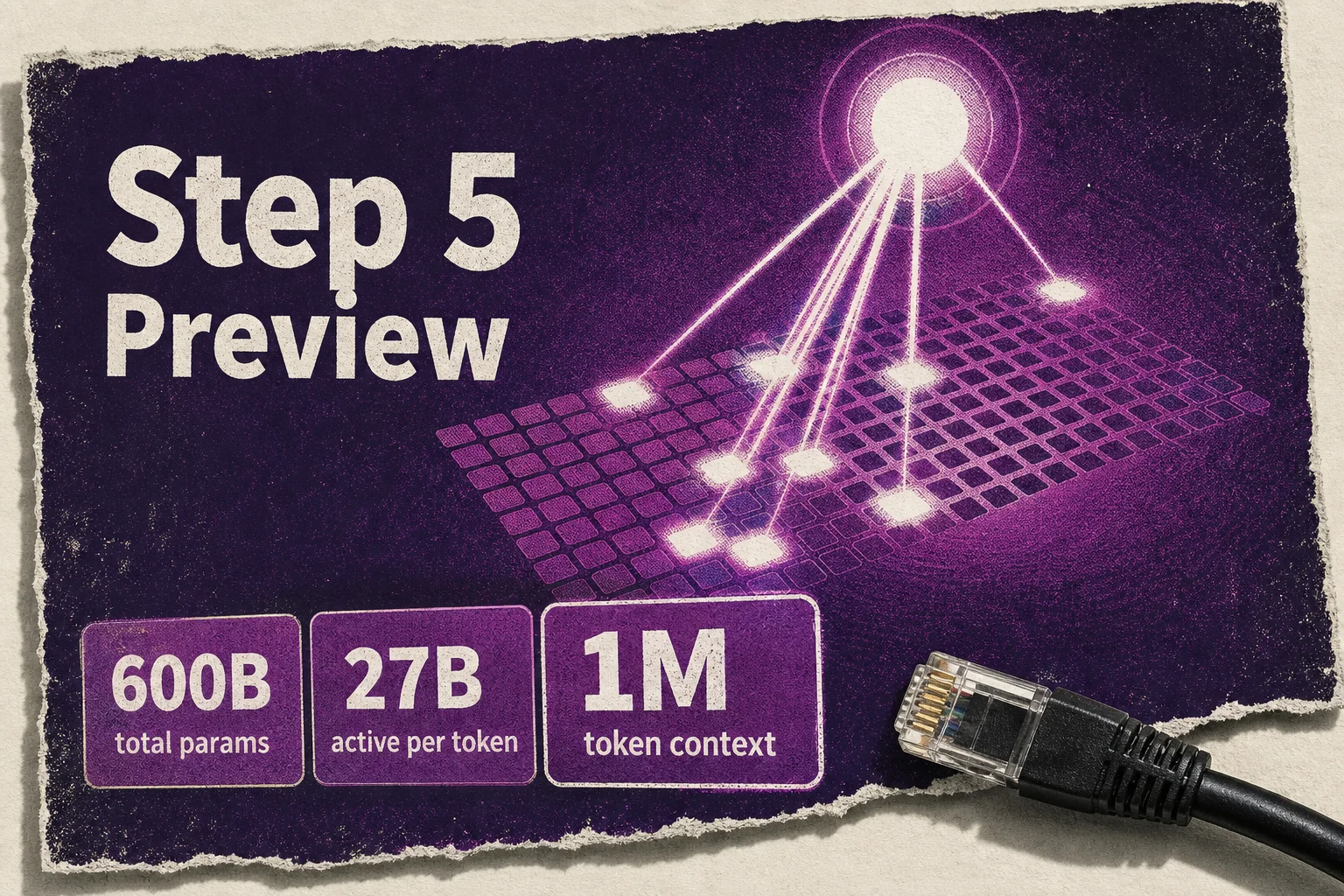
On October 24, 2026, Moonshot AI officially launched Kimi K3.1 Pro, the first model within the K3.1 family and a post-training upgraded variant built on the earlier K3 architecture. It retains the Mixture-of-Experts (MoE) design from K3. The model carries a total parameter count of 2.8 trillion, with 896 expert networks in place. Only 16 experts activate during each forward inference pass, which yields roughly 1.04 trillion active parameters for computation. It supports a 1,000,000-token native context window. A matching Highspeed variant ships alongside the standard release, delivering 2× to 3× higher output speed at the same intelligence level. Benchmark results show K3.1 Pro scores 65.7% on Terminal-Bench 4.0, surpassing GPT-6 Astra’s 58.2% and trailing Claude Opus 5.5’s 66.4% by merely 0.7 percentage points. Its Artificial Analysis intelligent index reaches 55, marking the first time a domestic Chinese model lands on the Pareto frontier. On the pricing front, the official API lists non-cached input at 13 CNY per million tokens and output at 68 CNY per million tokens. Cached input rates drop to 1.3 CNY per million tokens. In USD terms, the price bracket is $2 / $10, aligned with GPT-6.1 Sol and approximately half the cost of Claude Opus 5.5. Compared with the prior-generation K3, this model sees around a 33% price cut. Full weight release is scheduled to complete by November 4. Treerouter, an API gateway platform, has added Kimi K3.1 Pro to its model catalog for unified access and routing.
1. Core Architecture and Design Specifications
Moonshot AI continues using the MoE paradigm for K3.1 Pro instead of switching to dense model architecture. This design choice separates the full parameter pool from the compute footprint at runtime. The 896-expert structure means the model only routes each token to 16 selected experts during every inference step. This gated activation mechanism controls effective compute consumption, avoiding the linear scaling cost seen in dense models of comparable headline parameter size.
The native context limit remains 1 million tokens, inheriting the long-context strength that defined the Kimi product line. This window size supports direct ingestion of large code repositories, full financial prospectuses, multi-chapter technical documents and extended agent execution traces without aggressive pre-splitting. The Highspeed edition is built on the same weights and routing logic, with optimized inference kernels to prioritize low latency. It targets interactive agent workflows where end-users expect near-real-time responses, though it carries a higher unit price.
A major upgrade introduced in K3.1 Pro is the expanded reasoning strength control scheme. The older K3 supported only low, high and max modes. K3.1 Pro inserts a new medium tier, forming four configurable grades: low / medium / high / max. Developers can allocate compute budgets dynamically according to task complexity. Simple classification or retrieval jobs run on low mode to cut spend. Complex coding agent planning, mathematical derivation and financial modeling can switch to high or max for deeper deliberation. This granular control reduces unnecessary compute waste compared with fixed-strength invocations.
2. Benchmark Performance Breakdown
All benchmark figures cited come from official Moonshot announcements and third-party public test suites, with Terminal-Bench 4.0 and Artificial Analysis carrying higher reference weight than internal self-reported benchmarks. Terminal-Bench 4.0 evaluates agentic coding workflows under constrained resource conditions, closely mirroring terminal automation, script writing and repository refactoring work that engineering teams run in production.
| Benchmark | Kimi K3.1 Pro | GPT-6 Astra | Claude Opus 5.5 |
|---|---|---|---|
| Terminal-Bench 4.0 | 65.7% | 58.2% | 66.4% |
| Artificial Analysis Index | 55 | Not applicable | Not applicable |
On Terminal-Bench 4.0, K3.1 Pro closes the gap with the top Claude Opus 5.5 result and overtakes GPT-6 Astra by 7.5 percentage points. In Artificial Analysis scoring, the 55-point result places it on the Pareto frontier, meaning no competing model can simultaneously beat it on both performance and cost within this bracket. The Pareto designation signals a balanced tradeoff: buyers do not need to accept sharply higher costs for marginal performance gains, nor sacrifice capability to secure cheaper inference.
Additional third-party benchmark suites covering CAD tool calling, office document QA, long-horizon code planning and GUI agent tasks show consistent gains versus K3. It delivers stronger results on 3D scene generation based on Three.js, structured financial report parsing and multi-step terminal tool invocation. General conversational capability sees incremental refinement rather than dramatic leaps; the upgrade focus lands firmly on specialist agent workloads instead of casual chat.
It is important to distinguish benchmark types. Some leaderboards are vendor-hosted and tuned toward the releasing team’s strengths. Terminal-Bench 4.0 and Artificial Analysis operate as independent third-party evaluations, so they serve as more reliable indicators for production workload planning. Individual task success rates will still fluctuate based on prompt structure, tool binding and system prompt design.
3. K3.1 Pro vs K3: Key Differences
K3.1 Pro is a post-training iteration atop the K3 checkpoint launched in July 2026. The underlying MoE architecture stays unchanged, so teams familiar with K3 integration patterns will face minimal rework for migration. Improvements concentrate in four major areas.
First, professional task capability receives targeted reinforcement. K3 balanced general-purpose chat and reasoning evenly. K3.1 Pro allocates post-training compute toward coding agent scenarios, 3D asset generation with Three.js and quantitative financial research. It handles chained tool calls, multi-file code edits and long calculation traces more reliably. This makes it better suited for agent pipelines that connect external sandboxes, compilers and data query tools.
Second, the four-tier reasoning strength slider arrives. The medium tier fills a gap between fast low-latency runs and resource-heavy max reasoning. For many business workflows, medium offers sufficient quality without the full compute bill of max mode.
Third, the Highspeed variant joins the lineup. The original K3 did not have a dedicated speed tier. K3.1 Pro Highspeed delivers a 2–3× throughput uplift, built for customer-facing interactive agents where timeout and perceived delay directly impact user retention. Its pricing doubles relative to the standard K3.1 Pro variant.
Fourth, the pricing structure is revised downward. Output token pricing falls by roughly one third versus K3, and cached input creates a steep discount for repeated context prefixes. For long-context applications that reuse large reference documents across multiple turns, cached input pricing dominates total spend.
| Dimension | K3 | K3.1 Pro |
|---|---|---|
| Terminal-Bench 4.0 | No separate public score | 65.7% |
| Reasoning Modes | low / high / max | low / medium / high / max |
| Standard Output Price (USD per 1M tokens) | $15 | $10 |
| Weight Release Timeline | Already open | By November 4 |
| Highspeed Variant | Unavailable | Available, 2–3× faster |
4. Pricing Structure and Competitive Comparison
The published token pricing separates cached and non-cached input, a critical detail for long-context agent systems. When the model detects repeated prefix context already loaded in cache, input charges drop from 13 CNY / million tokens to just 1.3 CNY / million tokens. This 90% discount changes cost economics for document chat, code repository assistants and recurring agent sessions.
| Model Version | Non-Cached Input (CNY / 1M tokens) | Cached Input (CNY / 1M tokens) | Output (CNY / 1M tokens) | USD Equivalent (Input / Output) |
|---|---|---|---|---|
| K3.1 Pro Standard | 13 | 1.3 | 68 | $2 / $10 |
| K3.1 Pro Highspeed | 26 | 1.3 | 136 | $4 / $20 |
| K3 (Previous Gen) | ~20 | No separate cache tier | ~100 | $3 / $15 |
When aligned against competing international models in USD brackets:
- GPT-6.1 Sol: $2 / $10, matching K3.1 Pro standard pricing
- Claude Opus 5.5: $4 / $20, double K3.1 Pro standard output pricing
- GPT-6 Astra standard: $10 / $50, five times K3.1 Pro standard pricing
The cache discount creates a major practical advantage. Agents that retain a static knowledge base, reference manual or codebase in context across dozens of dialogue rounds will see most input volume qualify for the 1.3 CNY cached rate. This makes K3.1 Pro attractive for enterprise RAG and coding agent deployments where the same corpus loads repeatedly.
5. Access Channels and Weight Openness Plan
Moonshot commits to releasing the full model weights for K3.1 Pro no later than November 4. Open weights enable private local deployment, on-premises inference and custom fine-tuning for teams that cannot route sensitive data through public API endpoints. The Highspeed variant will also be available through the official API with its own dedicated model identifier.
Developers can call the public API directly via Moonshot’s official platform using the assigned model IDs. End users access the model through kimi.com, Kimi mobile applications and Kimi Work. For engineering teams running multi-model stacks, unified gateway access simplifies routing. Treerouter supports Kimi K3.1 Pro alongside other major models, letting developers switch between model endpoints with one consistent authentication scheme without rewriting client logic for each provider.
The weight release is separate from the hosted API service. Local deployment carries infrastructure requirements, including high-memory GPU servers and optimized MoE inference runtimes. Teams choosing self-hosting trade operational overhead for data isolation and predictable offline availability.
6. Migration and Upgrade Guidance
Whether a workload should migrate from K3 to K3.1 Pro depends heavily on the core use case. Teams building coding agents, automated terminal workflows, financial analysis pipelines or 3D generation agents gain the clearest benefits. The Terminal-Bench lift, expanded reasoning modes and cheaper output pricing combine to improve both capability and unit economics.
General chat, simple summarization and basic Q&A workloads show less dramatic improvement. For these scenarios, running A/B testing before full migration is recommended. Operators can route a percentage of traffic to K3.1 Pro and compare success metrics, latency and spend against the incumbent model.
The medium reasoning tier creates a new tuning knob. Existing K3 deployments that previously forced a choice between high cost high-reasoning mode and low-cost low-reasoning mode now have a balanced middle option. It is advisable to map task types to reasoning grades explicitly inside agent orchestration code, rather than locking every request to max.
The cached input feature requires integration with gateway or client-side context caching logic to realize savings. If the application does not send stable repeated prefixes, the 1.3 CNY rate will rarely trigger, and cost reduction will be limited. Engineering teams should audit context patterns first to estimate cache hit rates before building their cost forecast.
7. Limitations and Practical Caveats
Strong benchmark results do not eliminate failure modes common to MoE large language models. Routing errors, inconsistent tool call formatting and hallucinated function arguments can still appear, especially on highly niche domain tasks. The 1-million-token window does not mean perfect recall of every detail inside the context; long-context degradation remains present, though improved versus older generations.
Benchmark scores reflect controlled test conditions. Real production performance will shift based on prompt engineering, tool schema design, sandbox execution feedback and error recovery loops. Terminal-Bench measures isolated coding agent tasks, not end-to-end business agent reliability.
Pricing discounts apply only when cache matching succeeds. Cache invalidation rules, context mutation and session resets can erase cached prefix benefits. Highspeed mode costs twice the standard version, so latency-sensitive use cases need ROI validation against the faster response time.
8. Conclusion
Kimi K3.1 Pro represents a deliberate refinement of Moonshot’s MoE agent-focused model line. It pushes coding-agent benchmark performance past GPT-6 Astra while compressing pricing down to half of Claude Opus 5.5. The addition of medium reasoning strength, the Highspeed speed tier and cached-input pricing delivers finer controls for engineering teams building production agents. Its Pareto-frontier standing on Artificial Analysis highlights a favorable balance of capability and cost.
For teams already running Kimi-based coding, finance and long-document agents, K3.1 Pro provides a low-friction upgrade path. Teams operating multi-model gateways can route traffic to this new model as part of their model selection strategy. The upcoming open-weight release also unlocks private deployment for regulated workloads, expanding deployment options beyond hosted APIs.
The model’s strengths cluster around agentic tool use, terminal automation and specialist professional work. It is not a universal upgrade for every chat workload, so measured A/B validation remains good practice before full rollout.