Introduction
In 2026, AI large language models have become essential productivity tools for full-stack developers. From code generation and architecture design to technical documentation writing and data analysis, modern LLMs are reshaping the entire software development workflow. For most developers, the dilemma is no longer whether to adopt AI, but how to pick the most suitable model from a wide range of options.
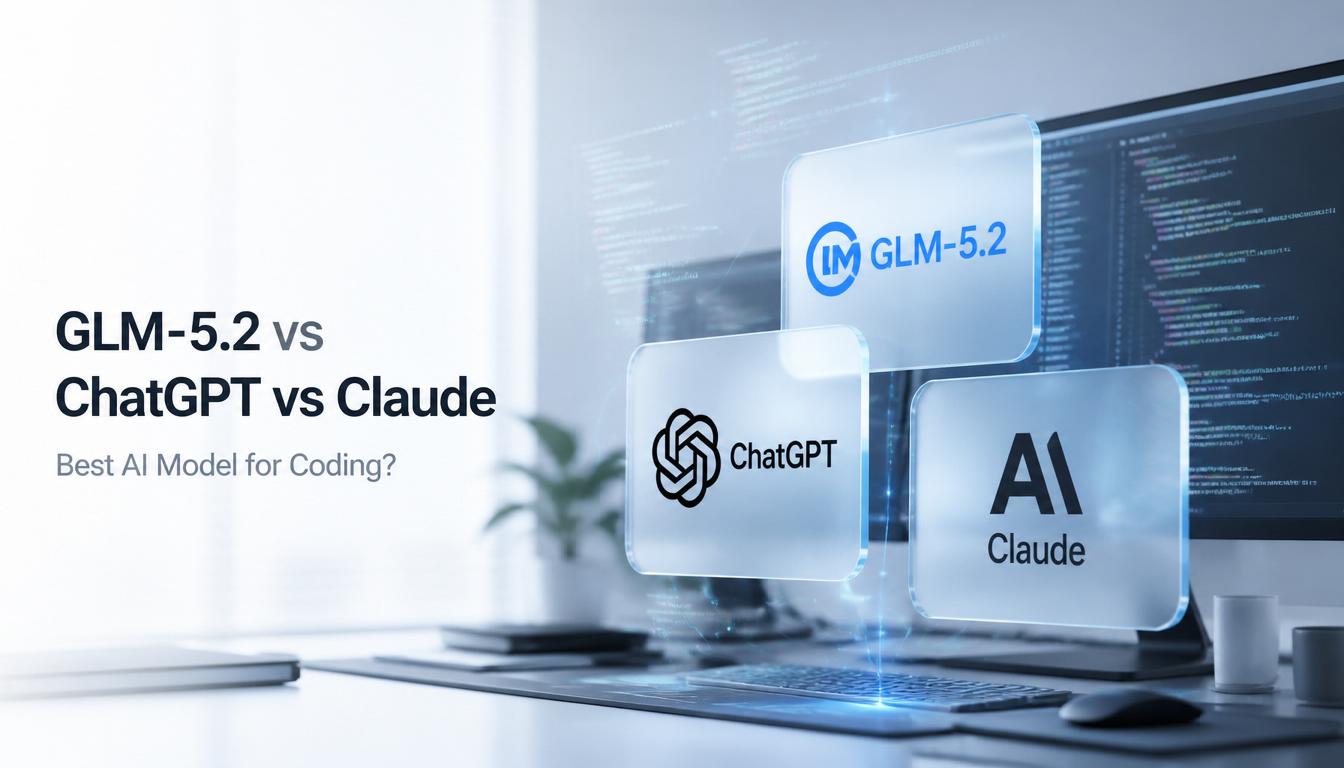
This article conducts an in-depth horizontal comparison of four leading LLMs: ChatGPT, Claude, Gemini and Grok. It analyzes their core capabilities and applicable development scenarios, and delivers practical selection guidelines for developers. Furthermore, it addresses the common challenges of accessing overseas LLMs domestically, offering feasible solutions to help technical practitioners boost work efficiency and avoid unnecessary troubles.
Core Capabilities of Four Mainstream AI Models
ChatGPT (OpenAI)
ChatGPT remains among the top-tier LLMs with comprehensive strengths. GPT-4o delivers outstanding performance in multimodal understanding and code generation. It features solid logical reasoning, well-structured generated code and an in-depth grasp of complex business logic.
Additionally, ChatGPT boasts the most complete ecosystem, including plugins, custom GPTs and open APIs. Its mature multimodal functions support image recognition, as well as PDF and Excel parsing, covering nearly all daily development and office requirements.
However, it poses obvious access barriers for domestic developers. It requires verification with overseas phone numbers, does not support domestic credit card payments for subscriptions, and demands strict network conditions, which greatly raises the overall usage cost.
Claude (Anthropic)
The Claude 3.5 Sonnet and Claude 4 series take a leading position in long-text processing. They support an ultra-long 200K token context window, which is fully capable of analyzing entire code repositories and sorting out documents for large-scale projects. They produce high-quality results in code review and project refactoring, winning wide recognition among senior developers.
The exclusive Artifacts function enables real-time preview of front-end code, significantly improving the efficiency of front-end development. Meanwhile, its outputs are highly standardized, compliant and secure.
Even so, domestic users still face considerable obstacles. The service is highly sensitive to IP addresses, requires binding with overseas phone numbers, and carries a relatively high risk of account suspension, making it cumbersome for ordinary developers to get started.
Gemini (Google)
The biggest highlight of Google Gemini 2.0 lies in its deep integration with Google’s ecosystem, enabling seamless connection with Gmail, Google Docs and Google Search. Its built-in web search enhancement retrieves traceable real-time information, making it ideal for technical research and industry data inquiry.
It possesses powerful native multimodal capabilities, especially remarkable performance in video analysis. The free version can fully meet the basic needs of daily development, presenting high cost performance for individual developers. It is also the most compatible choice for teams that rely heavily on Google Cloud and Google office tools.
Grok (xAI)
Developed by xAI led by Elon Musk, Grok is famous for its unrestricted and straightforward conversational style. Closely integrated with the X platform, it excels at capturing real-time global trending information, working well for brainstorming, copywriting and trend analysis.
Equipped with the Flux text-to-image model, it generates high-quality visual content. It supports an ultra-long context of up to 1 million tokens, putting its massive text processing capability on par with Claude. Currently, it is easy to use within the X platform, yet independent access requires an X Premium subscription, which limits its flexible application for developers.
Scenario-based LLM Selection Guidelines
When choosing a large language model, scenario matching matters more than blindly pursuing overall performance. These four models have distinct advantages in professional fields.
ChatGPT is the top choice for daily code generation and business logic writing, with Claude as a reliable alternative. For code review, architecture optimization and code refactoring of large projects, Claude stands out thanks to its long context window and profound code comprehension. Front-end developers are recommended to prioritize Claude for its Artifacts real-time preview feature.
When it comes to academic research, technical investigation and online information retrieval, Gemini’s search capability is irreplaceable. Grok is better suited for analyzing real-time hot topics and conducting creative brainstorming. For long document sorting, report reading and multimodal tasks involving images and videos, developers can flexibly choose from ChatGPT, Gemini and Grok according to actual demands.
Practical AI Workflow for Developers
Professional developers seldom stick to a single LLM. Instead, they combine different models properly to build an efficient closed-loop workflow.
During the requirement analysis phase, developers can use Claude to go through project documents and sort out core requirements efficiently. In architecture design, ChatGPT helps discuss technical solutions and compare different technology stacks. For coding implementation, Claude generates core business code while ChatGPT complements auxiliary logical code.
Claude undertakes code review and security detection to optimize code quality and eliminate potential risks. At the final stage of technical documentation, ChatGPT and Claude work together to draft and polish articles. A practical tip is to submit complex professional questions to two models at the same time, so as to integrate their outputs and draw on each other’s strengths.
Solutions to Access Barriers of Overseas LLMs
Difficulties Faced by Domestic Developers
Most mainstream overseas LLMs set high access thresholds for domestic users. Common troubles include complicated network configuration, mandatory overseas phone number verification, exclusive international payment channels and strict IP risk control that may lead to account bans. Spending plenty of time on environment setup will seriously undermine development efficiency.
One-stop Access via Aggregated API Gateways
An increasing number of developers turn to aggregated API gateways to avoid repeated configuration and multi-account management. Such platforms integrate multiple mainstream LLMs under unified interfaces, allowing users to switch freely between ChatGPT, Claude, Gemini and Grok.
As a professional model aggregation service, TreeRouter is designed to simplify multi-model invocation for developers. It unifies interface protocols and optimizes cross-border network links, while supporting centralized billing and usage monitoring. Developers only need one API key to call all mainstream LLMs, without worrying about IP restrictions, account registration or payment compatibility. It perfectly fits the scenario of frequent model switching in daily development and effectively lowers the barriers to using high-quality overseas AI models.
Frequently Asked Questions
Is there a huge gap between free and paid versions?
The difference is quite noticeable. The free tier of ChatGPT adopts GPT-4o mini with limited capabilities, while the Plus subscription unlocks the full features of GPT-4o, advanced data analysis and AI image generation. The free version of Claude also imposes daily usage limits. For long-term and high-frequency use, upgrading to a paid plan is a worthwhile investment.
Will AI replace programmers in the future?
In the short run, AI cannot replace professional developers. It acts more like a highly efficient junior developer, capable of handling repetitive coding, document generation and simple debugging. Core work such as complex architecture design, business decision-making and innovative technical solutions still depends on human experience and critical thinking. In the AI era, developers who master LLM tools will gain a competitive edge in career development.
Conclusion
The core principle of selecting AI large language models is to match practical scenarios, rather than chasing the most powerful or well-known products blindly. ChatGPT, Claude, Gemini and Grok all have irreplaceable strengths in code development, long-text processing, ecosystem connection and real-time information acquisition.
For domestic developers troubled by access restrictions and multi-account management, a reliable aggregated API gateway is an efficient solution. Services like TreeRouter enable developers to connect with global mainstream LLMs effortlessly, save time on environment configuration, and make AI a powerful booster for development work.